


How to choose a console table: dimensions, placement and 4 models
A practical guide to measuring for a console table, choosing the right depth and storage, and comparing four different models.
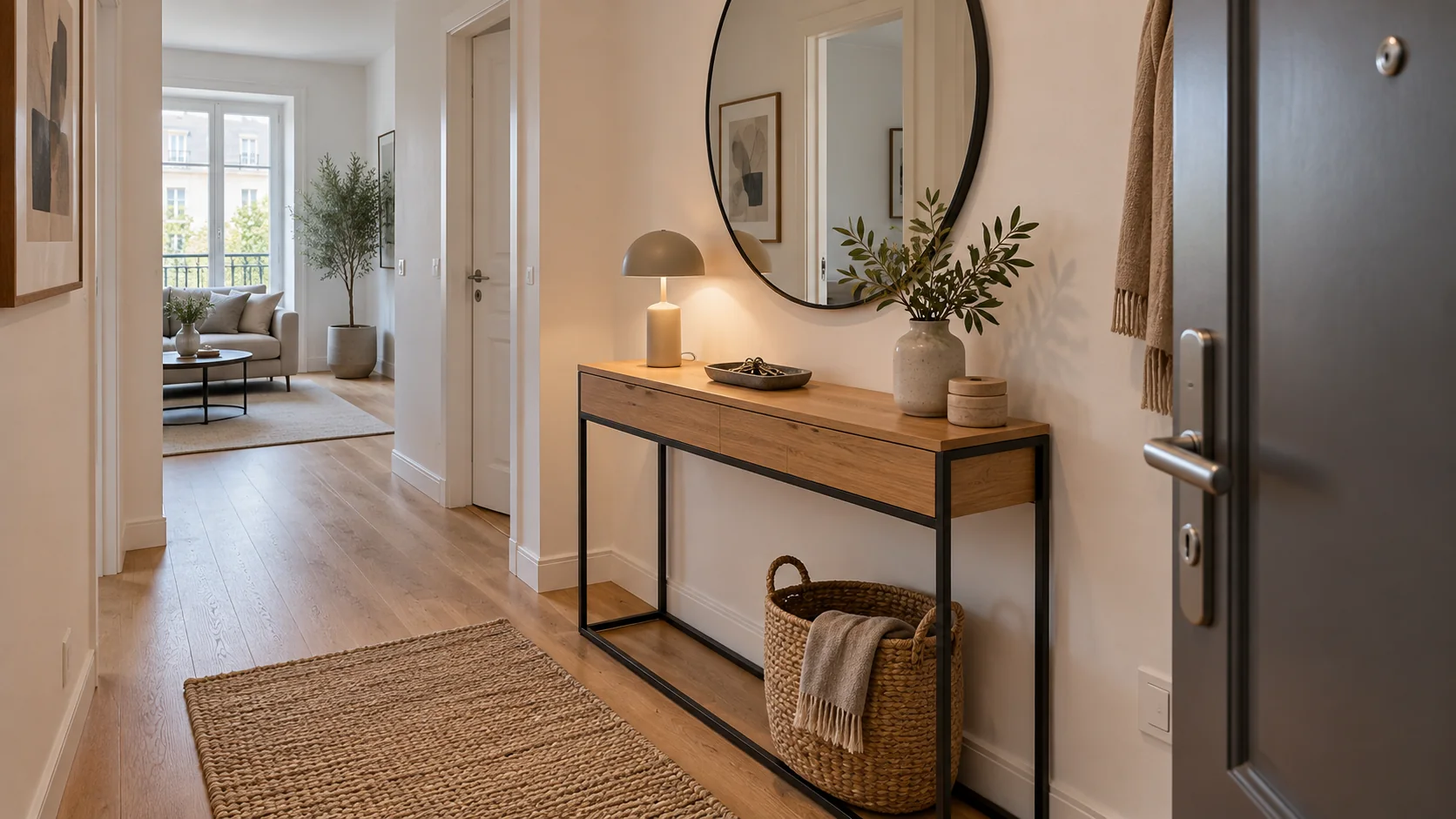
A console table can turn a narrow wall in a hallway, living room or behind a sofa into useful space. A shallow top alone does not guarantee a good fit: account for walking clearance, door swing, skirting boards, open drawers, sockets and wall anchoring. This guide explains how to measure the area and compares four designs from the Bonideco console table range.
Quick choice: a 20 cm deep open table suits a very narrow passage; a 24 cm model with fabric drawers adds concealed storage; a 35 cm table with rigid drawers and a shelf needs more room but holds more; a glass console looks visually light and needs more frequent cleaning.
Console tables: comparison of four different designs
We selected an ultra-slim open console, a compact design with fabric drawers, a deeper table with two rigid drawers and a shelf, and a glass console. Dimensions and specifications were checked against the Bonideco catalogue on 28 September 2026. This compares declared product information, not hands-on testing. Current price, availability and delivery appear on the product cards.
| Model | Dimensions | Storage and materials | Best suited to |
|---|---|---|---|
| VASAGLE LNT035KD01 | 80 × 81.2 × 20 cm | Single top; particleboard and steel | A very narrow hallway where a surface for keys or decor is enough |
| VASAGLE LNT092K01 | 76 × 80 × 24 cm | 2 fabric drawers and open shelves; board, steel and textiles | A compact entrance where small items should stay out of sight |
| HOMCOM 837-177 | 100 × 76.5 × 35 cm | 2 rigid drawers and lower shelf; particleboard and metal | A wider hallway or living room needing more storage |
| LGT025A01 | 100 × 80 × 35 cm | 2 glass surfaces and metal frame | An open display where a visually light design matters |
Remember: listed depth is the complete furniture footprint. Skirting boards, adjustable feet, handles and anti-tip hardware can change its actual position against the wall. Check the drawing, contents and assembly instructions for the exact model.
How to measure for a console table
Start with walking clearance, not empty wall length
Use painter’s tape to mark the full width and depth on the floor. Open the entrance, room and cupboard doors, add the shoes normally kept nearby and test the remaining passage. A few centimetres can determine whether groceries, a pushchair or luggage can pass comfortably.
Measure at the narrowest point, including handles, radiators and projections. A 20 cm table preserves more floor area than a 35 cm model but holds less. Establish the maximum safe depth before choosing drawers or shelves.
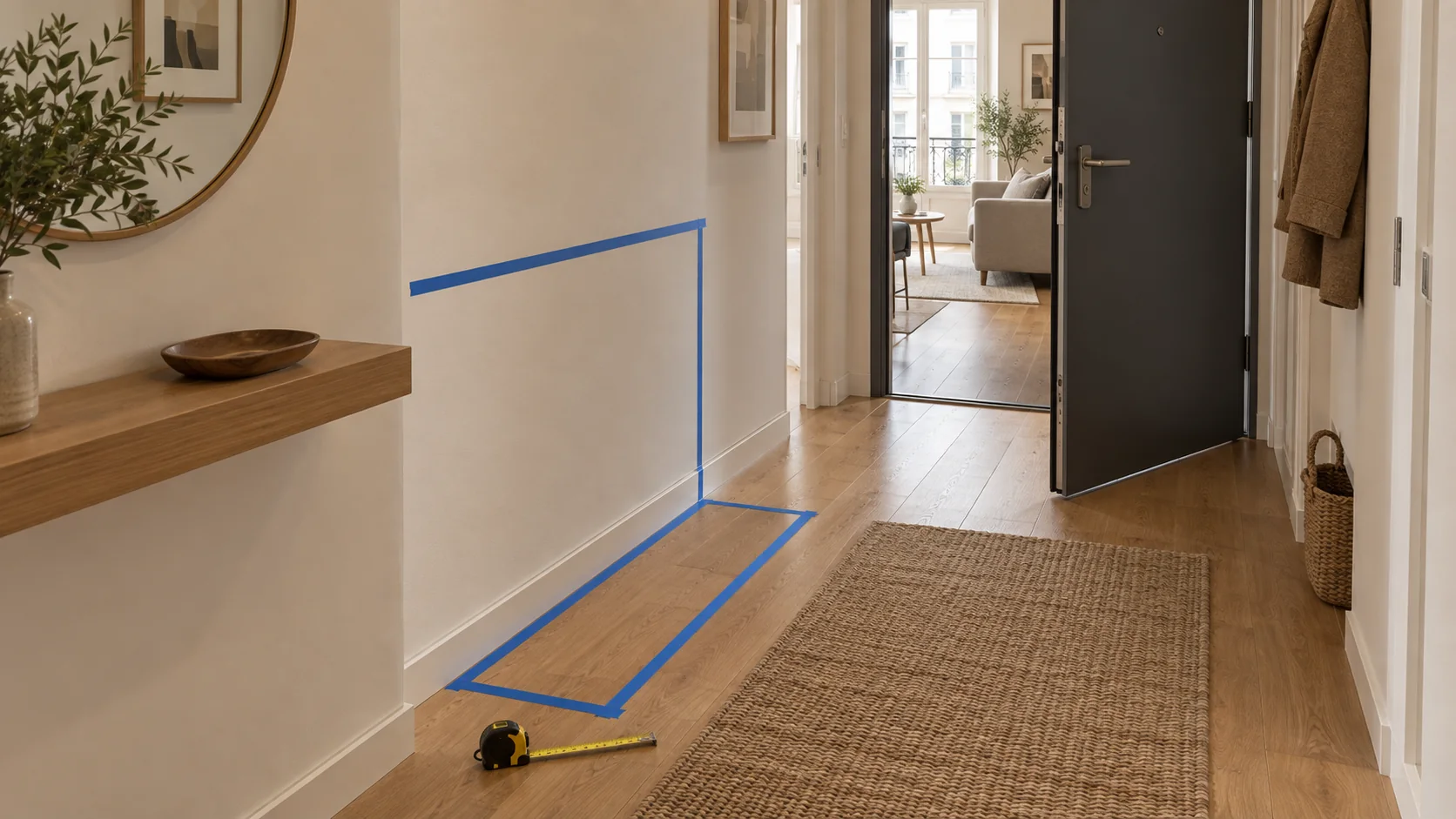
Allow for skirting boards and uneven walls
A skirting board may stop the legs reaching the wall, leaving the top several centimetres forward. Measure its height and thickness and compare it with the leg shape. Locate sockets, switches, an entry phone and cable routes. Do not cover a frequently used socket or trap a cable under a foot.
Older homes may have uneven floors and walls. Check the planned location with a long level or straight edge. Adjust the feet where the model allows it, level the furniture before loading it, then install the anti-tip device.
Leave room to open drawers
Drawer depth is not the same as the overall furniture depth. Allow room to pull it out fully while standing in front. For a lower shelf, measure the actual basket or box you intend to use. Do not block air vents or a radiator with stored items.
Where should a console table be placed?
Console table in a hallway
A hallway console commonly holds keys, post and daily essentials. VASAGLE LNT035KD01 is only 20 cm deep and 80 cm wide, making it useful where passage space is the priority. The catalogue states a maximum static top load of 25 kg, though tall or heavy objects should still stand securely and close to the wall.
A mirror can be hung above it, with enough space for objects on the top. A small tray protects the surface from keys and controls clutter. Give incoming post a defined place so that it does not consume the whole top.
Console table with drawers
VASAGLE LNT092K01 is 24 cm deep and 76 cm wide, with two fabric drawers for gloves, cables and other light items. The stated limit is 5 kg per drawer, so they are not intended for heavy tools or large files.
HOMCOM 837-177 is 35 cm deep and 100 cm wide. Its two rigid drawers and lower shelf provide more capacity but need a wider passage. The catalogue lists an anti-tip fitting; install it as instructed, particularly where children are present or drawers are opened frequently.
Console table behind a sofa
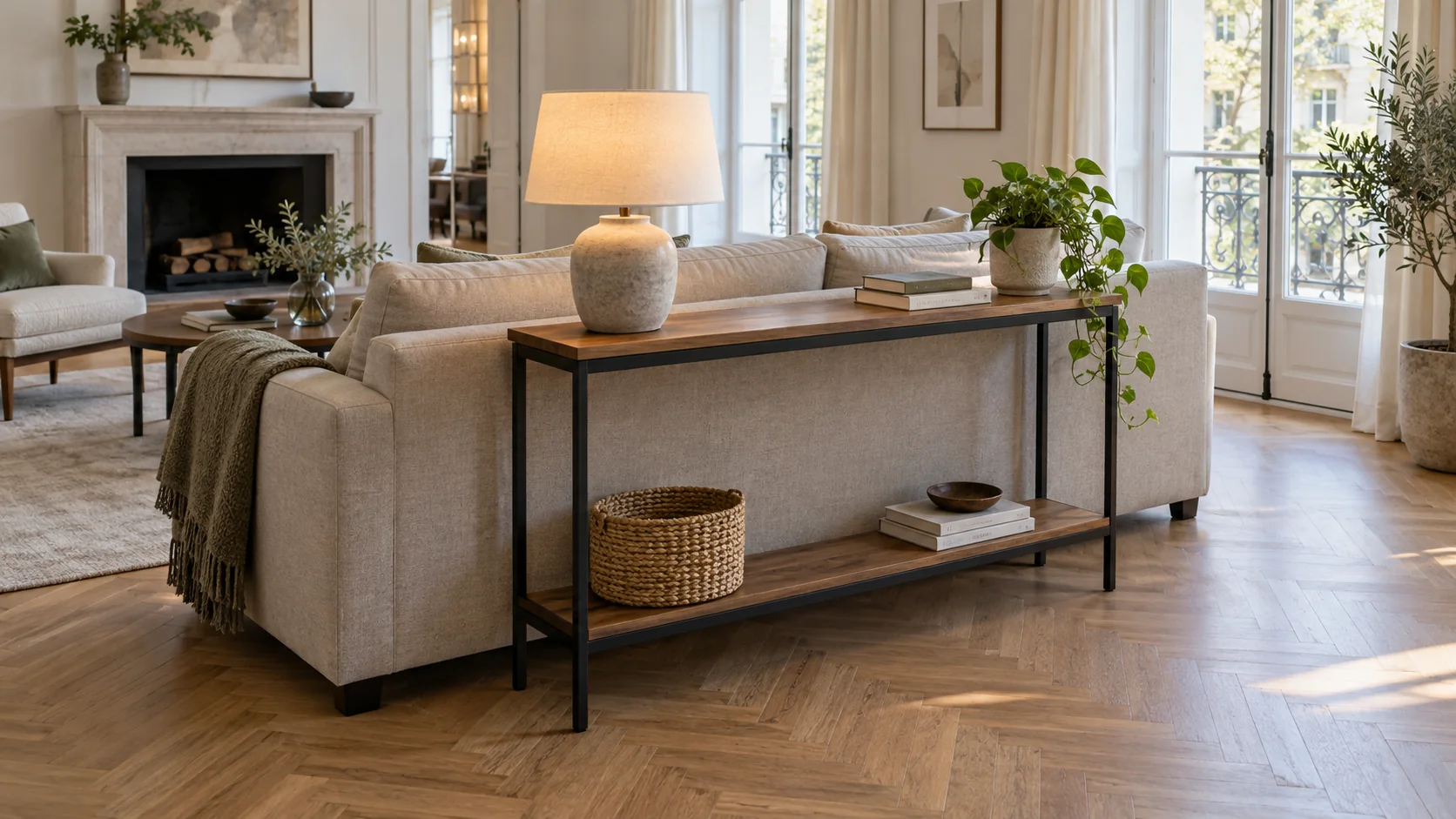
A table behind a sofa should not rise so far above the back that lamps or decor interfere with people sitting down. Measure the back height, the straight usable length and the remaining route behind it. Plan a safe power cable for a lamp: it must not cross a walkway or become trapped under a furniture foot.
Leave access for cleaning and account for skirting. An open lower shelf can hold baskets or books, but items visible from both sofa ends are best kept organised. Make sure no foot stands on a rug edge.
Console table in a living room or bedroom
In a living room it can anchor an empty wall; in a bedroom it adds a display surface. Glass model LGT025A01 measures 100 × 80 × 35 cm and combines a metal frame with two glass surfaces. Clear glass leaves the wall visible but shows fingerprints and dust more readily. The catalogue gives a maximum static shelf load of 20 kg.
Keep glass furniture away from door impacts and busy play routes. Check that edges and supports are undamaged, use the recommended cleaner, respect the load limit and fit any supplied anti-tip restraint.
Drawers, shelves and materials: what should you choose?
An open design feels lighter
A console without drawers keeps the space open and is easy to clean underneath. It works when you need one surface for a few selected objects, but it cannot hide daily clutter. If post, cables and gloves routinely gather on top, at least one drawer will be more practical.
Drawers hide small items and shelves add capacity
List what you will actually store. A fabric drawer is light and suitable for accessories; a rigid drawer keeps its shape better. A lower shelf suits baskets and boxes, but check its clear height and load limit. Avoid concentrating heavy items on one shelf edge.
Particleboard, metal or glass
Particleboard is generally wiped with a slightly damp cloth, but joints and unfinished edges should not remain wet. Check and tighten bolted metal-frame connections as instructed. Glass tolerates routine wiping but requires a suitable cleaner and care with hard or sharp objects.
A wood pattern does not mean solid wood. Read the material composition, load limits and care guidance on the product page. If you intend to place a large mirror, television or aquarium on the table, a single total-load figure is insufficient: confirm the purpose and limit of every surface.
10 checks before buying a console table
- Measure width, height and depth. Mark the full outline in the intended location.
- Test the passage. Consider its narrowest point and objects carried through it.
- Open every door. Include the entrance, room, cupboard and furniture drawers.
- Measure the skirting board. It can push the top away from the wall.
- Locate sockets and cables. Keep access clear and cables out of the walkway.
- Plan what will be stored. Check internal drawer and shelf dimensions.
- Compare load limits. Top, shelf and drawer limits may differ.
- Assess the floor. The table should not wobble or stand on a rug edge.
- Fit the anti-tip restraint. Select fixings for the wall and follow the instructions.
- Read the exact product page. Colour variants may have different dimensions, materials or SKUs.
After these checks, browse all Bonideco console tables. Filter first by a width and depth that fit safely, then compare storage, materials and style.
Frequently asked questions about console tables
How deep should a console table be in a narrow hallway?
There is no universal depth. Mark the outline and test the remaining passage with all doors open. Very slim designs can be around 20–24 cm deep; models with more storage often need 30–40 cm.
What is a suitable console table height?
Many models are around 75–85 cm high, but the right height depends on use and neighbouring furniture. Behind a sofa, compare it with the back; below a mirror, allow for the viewing height and objects on the top.
Does a console table need wall anchoring?
Use the anti-tip restraint whenever the manufacturer supplies or requires one. It is particularly important for narrow, tall furniture, drawers and homes with children. Fixings must suit the specific wall.
Can a console table be used as a desk?
Only for short tasks when the top depth, height and legroom are sufficient. A 20–24 cm deep console is generally too shallow for a permanent monitor and keyboard setup.
What can be stored in console drawers?
Keys, gloves, charging cables and other small items within the stated weight limit. Fabric drawers are best for lighter objects. Keep medicines and hazardous products according to their storage directions and out of children’s reach.
How should a glass console table be cleaned?
Use a soft cloth and the cleaner recommended by the manufacturer. Avoid hot, sharp or very heavy objects unless the instructions allow them. Regularly inspect glass supports, frame joints and the anti-tip restraint.